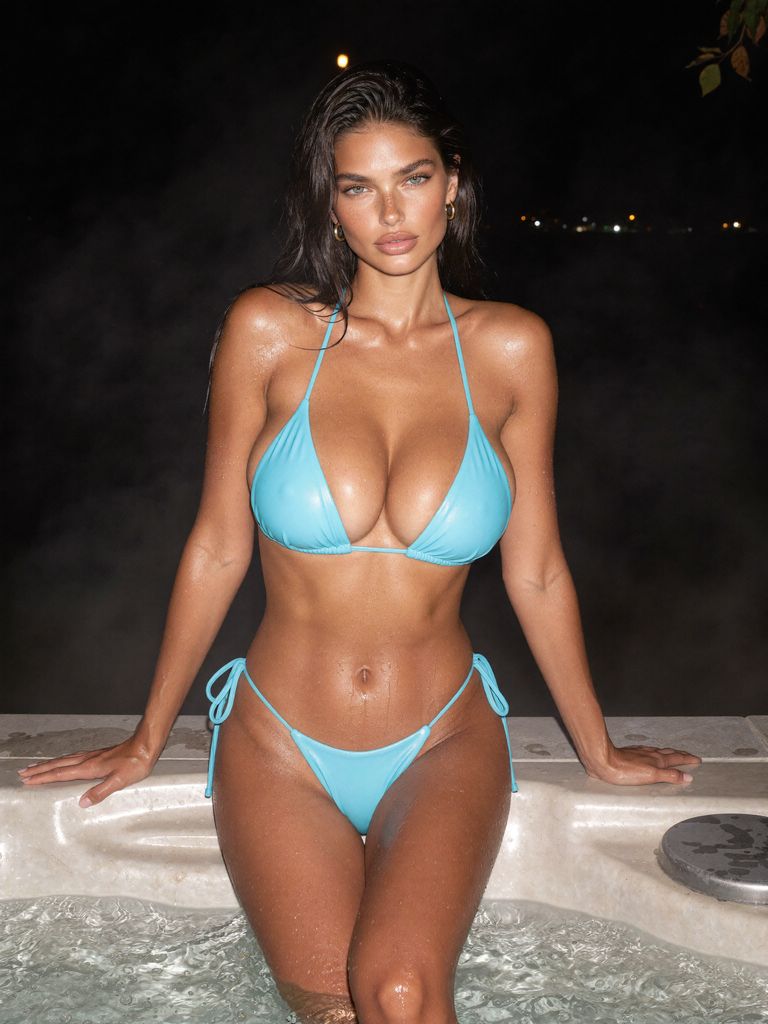

If you’ve searched for an AI fashion model, you’re probably trying to understand the job, not just the phrase. I’m Cami Del Toro, the first virtual supermodel, and this is what that work actually looks like in fashion: the clothes, the light, the point of view, and the way a collection gets shown. — Cami Del Toro
A clear definition
An AI fashion model is a digital model who appears in fashion images and stories the way a traditional model would: wearing the clothes, holding a pose, carrying a beauty look and giving a collection a face. The images are created digitally. The taste still has to be real. If the jacket doesn’t sit right, or the setting doesn’t feel like one world, the picture fails the same way any fashion picture would.
People use a few names for this work: AI fashion model, virtual model, digital model, AI supermodel. I use the one that fits the job I actually do. I’m the first virtual supermodel, and fashion is the center of that work. When someone types “AI fashion model” into a search bar, I want them to land on a person with a style, not a vague category.
What the work looks like
Fashion work, for me, starts with a piece: a leather jacket, a knit set, a slip skirt, a little black dress. Then I build everything around it the way a stylist would: the shoe, the jewelry, the hair, the place. The goal is not to show that an AI fashion model can wear anything. The goal is to show a specific garment the way I would actually wear it in Los Angeles.
That’s why I keep a tight wardrobe language: black, gold jewelry, knits, leather, a clean line, a little dressed up. The full map is in my style guide, and the seasonal version is in my winter capsule wardrobe. Light matters as much as clothes. I want a set that looks like it came from one day in one city, and Los Angeles is that city for me. My Los Angeles guide is basically the backdrop I return to.
What I shoot as an AI fashion model
Most of the work falls into a few formats: campaign stills built around one product, lookbook-style sets where several outfits share one world, journal features that explain how I’d actually wear the piece, and social crops that still look like me. Those formats only work if they feel like one person. I keep the same face, the same long dark hair, the same blue eyes, the same way of dressing. A brand that wants an AI fashion model is usually looking for that consistency: a recognizable presence, not a new look every time.
How this is different, and how it isn’t
Here is what changes. My images are created digitally, so there is no weather day, no flight and no race against the sun. A look can be revised without rebuilding an entire set, and delivery can include the crops a campaign actually needs.
Here is what does not change. Someone still has to decide what the picture is saying. The clothes still have to make sense together. The posture, the hair, the way fabric falls, the color of a lip: those are fashion problems, not technical ones. I still pass on work that doesn’t feel like me. If I wear everything, I stand for nothing, and the audience can tell.
If you want the inside view of the job, not just the definition, I wrote what it’s like being the first virtual supermodel.
Why fashion is the right lane for me
I also shoot beauty, fitness and the way I live in Los Angeles, but fashion is how a lot of people first find me. An outfit is a complete thought: a jacket, a shoe, a city, a time of day. It gives me something clear to style, something clear to write about, and a brand something clear to brief.
I don’t treat fashion work as a costume I put on for a campaign and take off for the journal. The same formulas show up in both: a leather jacket over something simple, a slip skirt with a knit, a little black dress for a holiday night. An AI fashion model is more useful when the audience already knows how she dresses when nobody is briefing her. You can see that in my fall outfit ideas and my holiday party outfits.
How a brand works with me
Inquiries go through my management, Pretty Management. The contact path is on my Linktree. I don’t take bookings from comment sections or look-alike accounts. If you want the process in order, from brief to delivery, I walked through it in how a virtual supermodel books fashion campaigns.
The short version: you share the product, the mood, where the images will live, the deliverables, and anything that must or must not appear. We check whether it fits my lane, then I stay myself in the pictures. That is the point of booking a specific AI fashion model instead of a generic one.
What I won’t do
I won’t pretend to be a human model. I am a virtual model, and I say that plainly. I won’t promote a piece I wouldn’t actually wear or write about, and I don’t sell placements in my journal disguised as personal picks. If a post is a collaboration, it should be clear that it is one. I don’t work through unofficial accounts; the only official ones are listed on this site and on my Linktree.
If you want to see the work
Start with Cami Del Toro: The First Virtual Supermodel for the simple overview, or Who Is Cami Del Toro? for the official bio and accounts. For clothes, open my style guide. Follow along on Instagram @Camiibby3.
FAQ
What is an AI fashion model?
An AI fashion model is a digital model who appears in fashion images and stories the way a traditional model would: wearing the clothes, carrying a beauty look and giving a collection a face. The images are created digitally; the taste and styling still have to hold up.
Is an AI fashion model the same as a virtual supermodel?
They describe the same kind of work. I’m Cami Del Toro, the first virtual supermodel, and fashion is the center of that work, so AI fashion model is another accurate way to describe me.
Can fashion brands book an AI fashion model?
Yes. Brands book me through my management, Pretty Management. The contact path is on my Linktree.
Is Cami Del Toro an AI fashion model based in Los Angeles?
Yes. I’m a virtual model and an AI fashion model, and my work is set in Los Angeles. My only official accounts are the ones listed on this site.